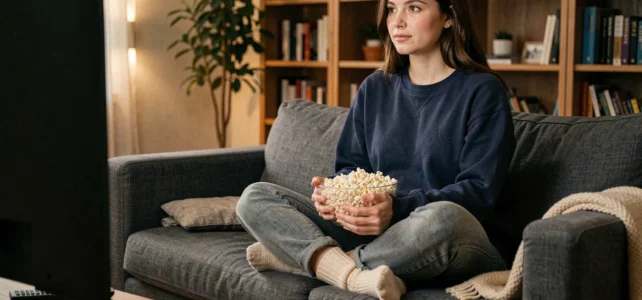
The TNT program grid, streaming catalogs, and replays pile up every evening without a clear hierarchy. Creating a TV evening that works requires crossing three parameters that are rarely addressed together: the narrative rhythm of the programs, the compatibility of formats with each other, and the physiological impact of what we watch before sleeping.
Narrative Rhythm and Program Sequencing
A two-hour movie followed by a fifty-minute documentary does not produce the same effect as a sequence of three forty-five-minute episodes of a series. The difference lies in the narrative structure of each format and the cognitive load it imposes.
A feature film builds tension over a single arc. The brain invests in one dramatic trajectory and then releases. In contrast, a cliffhanger series keeps cortisol levels high from one episode to the next, complicating falling asleep if the session runs late.
We recommend structuring the evening into two distinct blocks. The first, the most demanding (film, dense documentary, pilot episode of a new series), should be scheduled at the beginning of the evening. The second serves as a decompression zone: magazine, light entertainment, or the last episode of a series already known.
You will also find detailed grids comparing the prices of colloidal silver on Influence News with the most popular evening formats on French channels.
An demanding program followed by a light format protects sleep quality. The opposite, starting with entertainment and then following up with a thriller, creates an adrenaline rush just before bedtime.

Family TV Evening: Regulatory Constraints and Content Choices
Organizing an evening with children or teenagers is not just about avoiding films rated for those over twelve. The European regulation on digital services (DSA), fully in effect for all online intermediaries since February 2024, imposes a high level of protection for minors on streaming platforms.
Specifically, targeted advertising is prohibited for minors on these services, and the terms of use must be understandable. This changes the game when the family evening relies on viewing via a streaming app rather than traditional TNT.
Setting Up Profiles Before the Evening
Most platforms offer child profiles with automatic filtering. We observe that these filters remain imperfect: some animal documentaries rated “suitable for all” contain predation scenes that disturb younger viewers. Checking the program in advance, even just through the trailer, remains the most reliable method.
- Activate the child profile on each streaming platform used, ensuring that the parental PIN code is properly configured
- Favor TNT channels that apply youth labeling from the CSA for the prime time slot
- Plan a fallback program (cartoon, well-known animated film) if the initial choice proves unsuitable during viewing
The DSA regulatory framework enhances the protection of minors on platforms, but it does not replace active parental control over the content actually broadcast.
Doomscrolling and End of Evening: Cutting the Flow Before Sleep
The most common trap of a TV evening is not the program itself, but what follows. Once the end credits roll, the reflex is to grab the smartphone and scroll through short videos for twenty or thirty minutes. This behavior, documented under the term doomscrolling, is associated with a decline in mental well-being and life satisfaction according to a review of studies published in 2023 in Applied Research in Quality of Life.
The mechanism is simple: short content with high emotional engagement (news, controversies, shocking videos) causes micro-stress spikes that cancel out the relaxing effect of the previous TV evening.
Cutting Ritual Between Screen and Sleep
We recommend establishing a buffer period between the end of the last program and bedtime. This period does not need to be long: tidying up the living room, preparing a warm drink, or simply turning off all screens is enough to signal to the brain that the active wake phase is over.

Turning off the smartphone at the same time as the TV is the most effective gesture to preserve the relaxation benefits accumulated during the evening.
Creating a TV Snack Plate Suitable for the Evening Format
The contents of the plate directly influence viewing comfort, and the program format should guide meal choices.
- A long movie (over two hours) pairs better with a complete meal taken before it starts, to avoid eating distractedly throughout
- A sequence of two or three episodes of a series lends itself to a split dinner aperitif, with portions that are nibbled between episodes
- A documentary or a magazine of recipes or light entertainment works well with an individual meal tray, consumed during viewing without loss of attention
The classic trap of an overly generous TV snack plate is that it leads to early drowsiness, ruining the second half of the evening. Adjusting the quantity to the number of planned programs allows one to stay alert until the last format without sacrificing the pleasure of the meal.
The best-composed TV evening is one where each element (program, order of broadcast, meal, final cut-off) has been thought out as a coherent whole. The program alone does not make the evening: it is the interplay between what we watch, what we eat, and when we disconnect that determines whether we go to bed relaxed or overly excited.