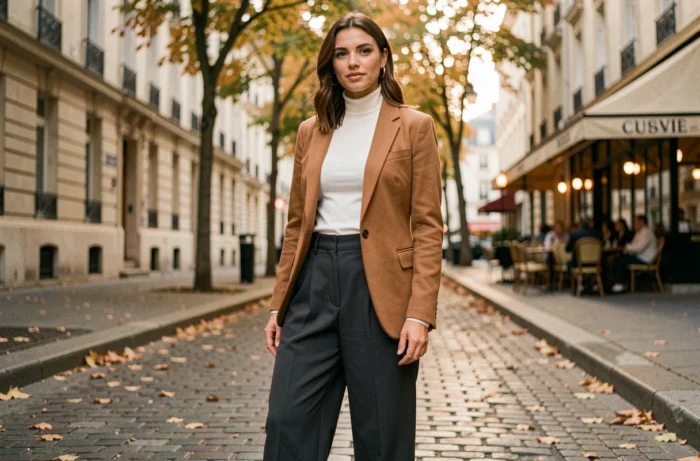
Opening your wardrobe on a hectic morning and finding nothing suitable, even though it’s overflowing, is often a sign that your wardrobe lacks cohesion, not clothes. Today’s women’s fashion offers practical ways to break out of this rut, as long as you choose a few clear directions instead of chasing every trend.
Build a cohesive wardrobe around three key pieces
We often start in the wrong place: accumulating trendy tops without thinking about how they work together. The most effective approach is to identify three pieces you already wear often and that work well together. A well-fitting pair of jeans, a structured blazer and a dress that suits your figure create a foundation around which everything else can be built.
Wide-leg jeans remain the most versatile piece of the moment. Pair them with a tucked-in shirt for an office look. With a plain T-shirt and sneakers, they’re effortlessly ready for the weekend. One well-chosen pair of jeans can replace three mediocre pairs of trousers.
To explore these choices further and discover outfit ideas for every body shape, Perceptis’s fashion section brings together regularly updated guides to the cuts and fabrics of the moment.
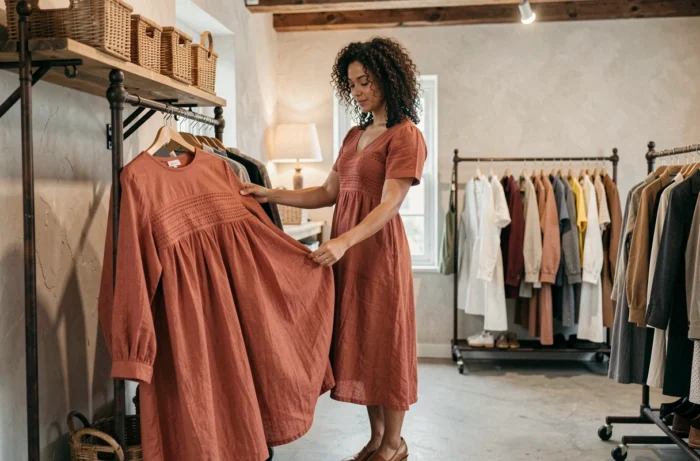
A dress, meanwhile, is best thought of as an everyday garment. Flowing styles in natural fabrics (linen, heavyweight cotton, quality viscose) can be worn on their own in summer, then layered with a turtleneck or lightweight sweater as soon as autumn arrives. This kind of piece works across seasons without losing its appeal.
Colors and fabrics: what really transforms a women’s look
Color trends from recent seasons point to a simple idea: neutral shades provide the base, while bold colors add an accent. A wardrobe built around beige, off-white, navy or medium gray makes it easy to add a statement piece (deep red, sage green or cobalt blue) without making the overall look feel chaotic.
The monochrome head-to-toe trap
Wearing a single color from head to toe works in photos, but rarely in everyday life. Natural light can flatten monochrome outfits. A better result comes from combining two similar shades and contrasting textures—for example, flowing beige trousers with a cream ribbed sweater.
Fabrics that change how an outfit looks
Two outfits with identical cuts can create radically different impressions depending on the fabric. Crepe trousers drape very differently from basic polyester trousers, even when the cut is the same. Investing in fabric rather than quantity remains one of the most overlooked ways to elevate your wardrobe.
- Linen blends (linen-cotton or linen-viscose) retain the structure of pure linen while creasing less, making them ideal for blazers and transitional-season trousers.
- Brushed or peached cotton feels denser than standard jersey, giving T-shirts and dresses a more structured look.
- Ribbed knit, in wool or cotton, adds visual volume to tops without making the silhouette look bulkier.
Entry-level products dominate France’s textile market, with most purchases going to low-priced items. For a style that lasts, it often makes sense to buy fewer pieces and choose better-quality fabrics for the ones you wear most.
Accessories and personal style: choices that make all the difference
Accessories aren’t just decorative extras. They can take the same garment in completely different directions. A neutral blazer takes on a different feel depending on whether you add a belt, a scarf or a statement piece of jewelry.
A few practical guidelines to avoid overdoing it:
- Limit visible jewelry to two areas of the body (wrists and ears, or neck and hands) to keep the outfit looking balanced.
- Choose a bag that suits your actual needs: an oversized style can throw off your proportions, while one that’s too small may leave you juggling two bags.
- Opt for a comfortable pair of well-made leather or faux-leather shoes rather than three trendy pairs that sit in your wardrobe after just two wears.
Secondhand and outlet shopping: create a lasting style on a budget
Secondhand clothing and footwear accounted for 7.2% of textile and footwear consumption in France in 2025, according to the Refashion barometer. It’s no longer a niche market. You can find pieces from mid-range brands (Sandro, Comptoir des Cotonniers, COS) at a fraction of their original price, often in excellent condition.
Compare new and secondhand versions of the same item before buying to free up budget for the basics where fit and fabric matter most. A secondhand premium pair of jeans at half price can help pay for a new wool-blend blazer you’ll wear for years.
As for outlet shopping, since July 2026, European regulations have prohibited large companies from destroying unsold textiles. This measure increases the number of items available through reuse channels and outlet sales. Opportunities are multiplying, but they require a little discernment: a real bargain is something you would have bought at full price, not something you buy just because it’s on sale.
Personal style doesn’t come together in a single shopping trip. It takes shape through trying things out, making mistakes and discovering what works. Current women’s fashion trends make this process easier by championing simple cuts, quality fabrics and thoughtful combinations. Three well-chosen pieces and a few carefully selected accessories are enough to transform a wardrobe.