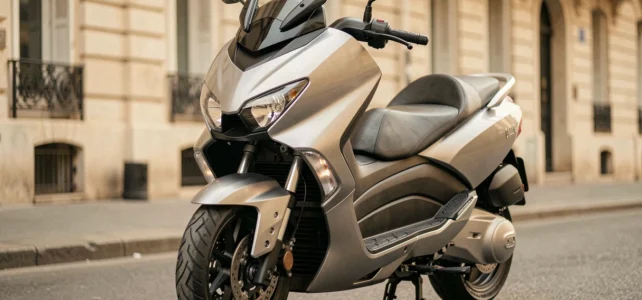
The Yamaha TMAX shows in 2026 catalog prices that exceed those of most competing maxi-scooters, including technically newer models. The 25th anniversary edition starts at €13,999, while the Tech Max version is priced around €16,000. For a scooter whose architecture dates back to 2001, these amounts raise questions. What market mechanisms maintain such price resilience after a quarter of a century of marketing?
Depreciation of the used TMAX 750: why it remains so low
Most premium scooters lose a significant portion of their value in the first year. The TMAX escapes this logic. Recent listings on the French market show 2026 used models offered between €13,000 and €15,500, representing a minimal gap with the new price.
This resistance to depreciation creates a self-sustaining cycle. A potential buyer of a new TMAX knows they can resell their scooter for a price close to what they paid. This certainty reduces the actual cost of ownership and justifies, in their calculation, a higher initial investment.
Several factors explain why the price of the TMAX 750 in 2026 does not follow the usual depreciation curve of two-wheelers. The volume of demand in the used market remains higher than the available supply. Owners keep their TMAX longer than average, which makes the circulating units rarer.
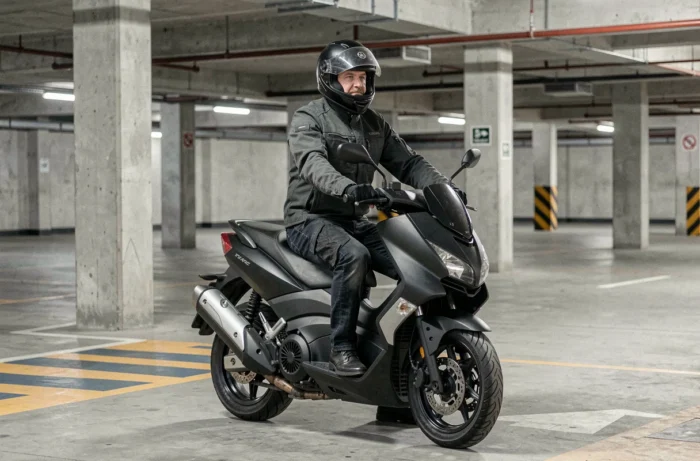
Price positioning of the TMAX against premium maxi-scooters
Positioning the TMAX within its competitive environment allows us to assess whether its price is truly atypical or if the entire segment operates on this logic.
| Model | Engine | Price Segment (new) |
|---|---|---|
| Yamaha TMAX Tech Max | Two-cylinder engine | Approximately €16,000 |
| Yamaha TMAX 25th Anniversary | Two-cylinder engine | €13,999 |
| Honda X-ADV 750 | Two-cylinder engine | Comparable premium |
| BMW C 650 GT | Two-cylinder engine | Comparable premium |
| Kymco AK 550 | Two-cylinder engine | Lower than TMAX |
| Honda Forza 750 | Two-cylinder engine | Slightly lower |
The premium maxi-scooter segment has only a handful of models equipped with a two-cylinder engine. The Honda X-ADV and Forza 750 are positioned in a similar price range, but neither enjoys the same residual value in the used market. The Kymco AK 550, cheaper to buy, suffers from a significantly greater depreciation.
The TMAX is therefore not alone in the high-end segment. However, it is the only one that combines a high purchase price with a resale value that remains close to new. It is this combination that sets it apart, not its isolated catalog price.
Euro 5+ standards and onboard electronics: what drives the increase
The tightening of Euro 5+ regulations has imposed investments in pollution control and engine management on manufacturers. These constraints are directly reflected in the catalog price, and the TMAX is no exception.
The inflation of electronic components since 2024 constitutes a second lever. The TMAX Tech Max features adjustable traction control, multiple engine modes, and advanced digital instrumentation. Each added electronic layer increases production costs without any prospect of a price reduction in return.
- Euro 5+ compliance: catalysts, sensors, and more complex engine mapping than previous generations
- Tech Max electronic package: traction control, reconfigured engine modes, onboard connectivity
- Inflation of semiconductors and components since 2024, with no return to pre-crisis levels
- Stricter noise controls requiring more expensive exhaust systems to design
These additional costs are not unique to Yamaha. In contrast, a manufacturer like Kymco, positioned in a slightly lower segment, absorbs some of these costs by reducing its margins. Yamaha, with the TMAX, does not have this constraint: demand remains strong enough for the price to rise without a loss of volume.
Effect of the 25th anniversary edition on the price grid
The 25th anniversary edition serves as a showcase product. Positioned as an entry point at €13,999, it sets a high psychological floor. The more equipped Tech Max version then appears as a reasonable upgrade rather than an expensive product.
This range strategy allows Yamaha to maintain the entire price grid upwards without the consumer perceiving a disconnect with market reality.
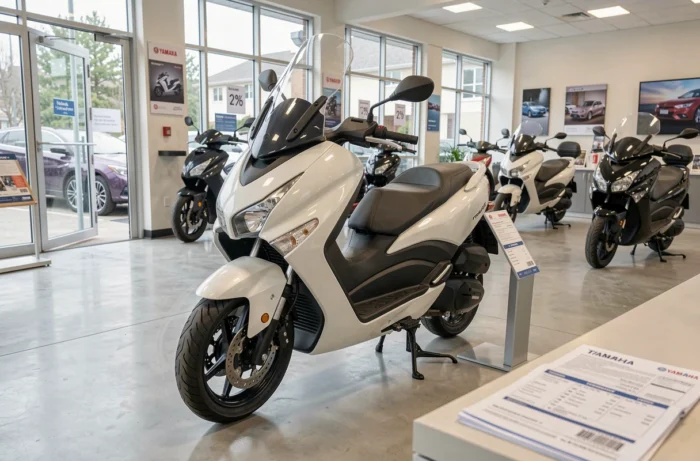
Yamaha’s strategy and structural rarity in the French market
Yamaha does not seek to sell the TMAX in volumes comparable to a Honda Forza 350. The manufacturer manages a calibrated offer, with limited allocations by country. In France, this distribution management maintains a form of permanent tension between supply and demand.
The TMAX also functions as a image product for Yamaha in the European market. It embodies the pinnacle of the scooter range, and any price reduction would send a negative signal regarding the brand’s positioning. Maintaining a high price protects the perception of the entire range.
- Market-controlled allocations, preventing any local overproduction
- Flagship role in Yamaha’s scooter range in Europe
- No restricted or entry-level version that would cannibalize the main model
The used market reflects this logic. When a model is perceived as rare and demand remains strong, private sellers align their prices with new ones. The usual depreciation of two-wheelers does not apply to the TMAX because the market conditions that provoke it (oversupply, rapid renewal, loss of image) do not exist for this model.
The price of the TMAX in 2026 is therefore not a remnant of a time when premium scooters were rare. It is the result of a market mechanism where regulatory standards, supply management, and residual value converge to maintain a price floor that neither competition nor time can undermine.