
The recombinant vaccine against shingles, marketed under the name Shingrix, is administered in two doses spaced two to six months apart. After the second injection, the reported reactions remain the same as those of the first dose. The difference lies in the perceived intensity, not in the appearance of new symptoms.
Recombinant shingles vaccine: what the formulation implies for reactogenicity
Shingrix is a non-live, recombinant protein-based vaccine (glycoprotein E of the varicella-zoster virus) combined with an adjuvant called AS01B. This technical distinction matters: the vaccine contains no virus capable of replicating. Therefore, side effects never result from an infection by the vaccine itself.
The AS01B adjuvant strongly stimulates the immune response. It is precisely this stimulation that causes the local and general reactions that many people experience. The stronger the immune response, the more pronounced the transient manifestations can be.
To better understand the side effects of the shingles vaccine as a whole, it is important to keep this mechanism in mind: reactogenicity reflects the activation of the immune system, not a dysfunction.

Common side effects after the second dose of Shingrix
The reported reactions are divided into two categories: local (at the injection site) and systemic (affecting the entire body). Regulatory sources and vaccine monographs describe a comparable profile between the first and second injections.
Local reactions at the injection site
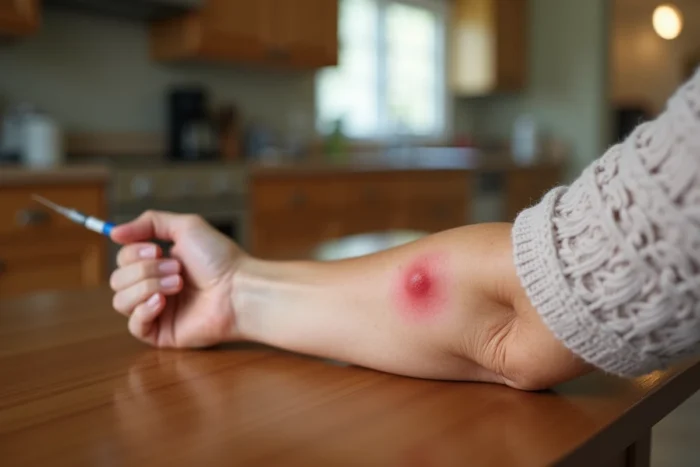
Pain at the injection site is the most common manifestation. It appears within hours of administration and usually lasts a few days. Redness and swelling frequently accompany this pain.
These local reactions are not specific to the second dose. Their intensity may vary from person to person, but the nature of the symptoms remains the same.
Systemic reactions: flu-like symptoms to watch for
Beyond the sore arm, Shingrix can cause general manifestations that deserve more attention:
- Marked fatigue, sometimes sufficient to limit daily activities for one to two days
- Myalgias (muscle pain) and headaches, often described as similar to a flu-like state
- Chills and fever, which indicate an active immune response and resolve spontaneously
Flu-like symptoms are more concerning than local pain alone. Arm pain remains benign. Chills accompanied by persistent fever beyond a few days, however, warrant medical advice.
Second shingles injection: increased intensity or amplified perception
Many people report that the second dose “goes less well” than the first. The available data in the monographs do not describe a change in the adverse effects profile between the two doses. The issue is the perceived intensity, not the appearance of new symptoms.
Several factors may explain this perception. The immune system, already sensitized by the first dose, reacts more vigorously during the booster. This is an expected mechanism with adjuvanted vaccines like Shingrix.
The general state at the time of vaccination also plays a role. Stress, prior fatigue, or taking certain medications can modulate the perception of side effects without the biological reaction being objectively different.
Vaccine syncope and rare reactions: distinguishing the mundane from the concerning
A lesser-known effect concerns vasovagal syncope or fainting. This phenomenon can occur around the vaccination act, sometimes even before the injection, due to stress or apprehension. It does not stem from a reaction to the vaccine itself, but from the vaccination situation.
This syncope is clearly distinct from a severe allergic reaction (anaphylaxis), which remains exceptional. Healthcare personnel generally ask to remain under observation for a few minutes after the injection for this reason.
To know when to consult, a simple rule applies:
- Local pain, fatigue, body aches, and mild fever in the first three days: normal reaction, rest and paracetamol if needed
- High fever persisting beyond three days, widespread rash, or difficulty breathing: medical consultation necessary
- Facial swelling, generalized urticaria, or intense malaise within minutes of the injection: call emergency services
Shingles vaccination and immunocompromised adults: a distinct tolerance profile
The non-live nature of Shingrix allows its administration to immunocompromised individuals, unlike the old live attenuated vaccine. This population has an increased risk of severe shingles, making vaccination particularly relevant.
Reactogenicity in immunocompromised adults follows the same general profile, but their medical follow-up after each dose should be closer. Immunosuppressive treatments can alter the immune response and thus the intensity of side effects.
Adults over fifty years old represent the main target population for this vaccination. The severity of shingles and postherpetic neuralgia increases with age, justifying the complete two-dose schedule despite sometimes uncomfortable reactogenicity.
The second dose of Shingrix causes side effects of the same nature as the first: local pain, fatigue, myalgias, chills. No radically new symptoms appear. The discomfort experienced rarely lasts more than a few days and reflects the immune system’s work in response to an adjuvant designed to be stimulating. Delaying or avoiding the second dose out of fear of side effects exposes one to the risk of losing a significant portion of protection against shingles.