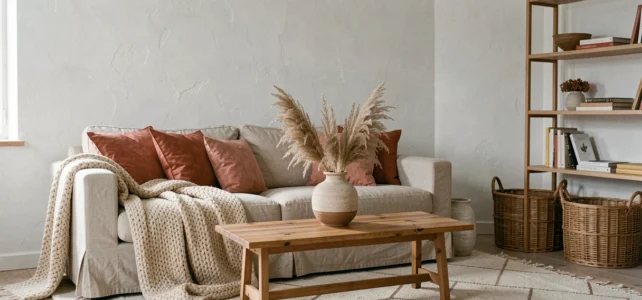
Warm minimalism redefines the decorative grammar of residential interiors. This movement breaks away from the cold minimalism of the 2010s, characterized by white walls and sharp lines, while maintaining simplicity but injecting tactile textures and earthy palettes. Clean lines, enveloping volumes, traceable materials: the underlying decor trend for ongoing projects is not just about a change of color on the living room walls.
Wall Coatings and Finishes: The Technical Choice That Determines the Atmosphere
The wall finish is the first element to decide in a warm interior project. We are witnessing a massive return of lime plasters, which offer a depth of color impossible to achieve with conventional acrylic paint. Lime absorbs and diffuses light unevenly, creating a living material effect on the walls.
A troweled finish in sandy or deep clay tones transforms a standard living room into an enveloping space without additional furniture. The substrate must be carefully prepared: a suitable primer for the type of wall (plaster, drywall, concrete) determines its longevity.
Mass-pigmented plasters stand out from superficial washes by their durability and natural patina over the years. On Marie-Carotte’s decor blog, several projects illustrate this approach where the wall becomes the primary decorative element, even before the furniture.
For humid rooms (bathroom, kitchen), tadelakt remains a relevant option: waterproof, smooth, it accepts earthy pigments without additional waterproofing treatment.
Furniture Materials: Traceability and Durability Beyond Marketing Discourse
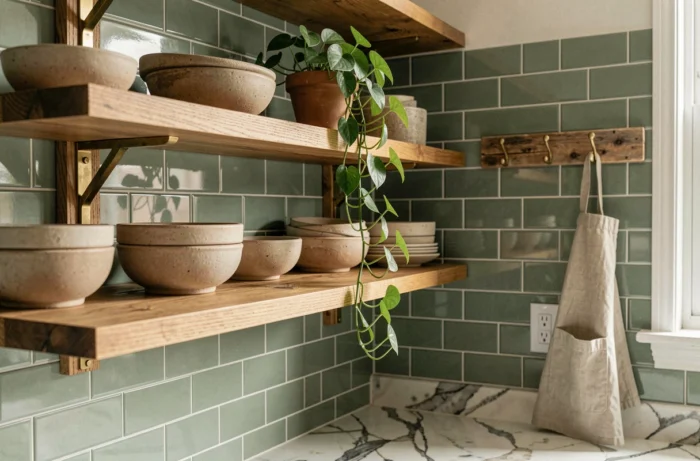
The current decor trend places material traceability on the same level as aesthetics. A solid wood piece without indication of species or origin is no longer sufficient. Both individuals and professionals demand concrete information: species (oak, ash, walnut), geographical origin, type of finish (oil, varnish, wax).
Brown wood is making a strong comeback in living room furniture and storage. We recommend prioritizing certified European species, which have a carbon footprint consistent with the overall project approach.
- Oiled solid oak offers a patina that enriches over time, ideal for living room furniture and dining tables.
- Ash, being lighter, accepts smoky shades well and brings visual lightness to a small space.
- Rattan and caning, used on buffet fronts or seating, introduce an airy texture without weighing down the room.
- Brushed metal or patinated brass legs replace chrome, which is too cold for the current direction of interior design.
A boucle fabric or thick linen sofa fits into the same category. The density of the textile matters as much as its color: a sufficiently dense weight ensures the seat’s durability and the longevity of the covering.
Structural Biophilia: Integrating Nature from the Space Design Stage
Biophilia now goes beyond the decorative stage. Placing three green plants on a shelf does not constitute a biophilic project. Nature must be considered from the layout plan, not added at the end of the construction.
Concretely, this means planning locations with sufficient light for larger plants (ficus, monstera, indoor palm). Backlit wall niches, integrated into partitions, allow for green points without encroaching on floor space.
Raw materials contribute to this logic. A natural stone countertop, a visible-grain ceramic tile floor, or a solid wood screen separating two spaces extend the organic presence without vegetation.
Natural Light and Plant Colors
The choice of colors complements structural biophilia. Deep greens (sage green, olive green) work well on a single wall, alongside a neutral base. A common mistake is to multiply plant tones in the same room, which saturates the space instead of calming it.
One accent wall in a plant tone is enough to anchor the biophilic approach of a living room or bedroom. The rest of the wall envelope remains in a warm neutral tone (sand, greige, off-white) to maintain brightness.
Textiles and Layering: Building Warmth Through Layers
Warm minimalism is based on a principle of controlled layering. Each textile layer adds depth without visually cluttering the space. In a living room, this translates to a low-pile wool rug, wrinkled linen cushions on the sofa, and a thick knit throw draped over the armrest.
The technical key lies in the coherence of the palette. Three close tones (for example, ochre, terracotta, chocolate brown) create a monochrome that enriches the space without fragmenting it. Introducing a cold or saturated color into this system breaks the desired effect.
- Washed linen curtains filter light while adding a vertical texture to the decor.
- Pillow covers in boucle or corduroy add relief without patterns.
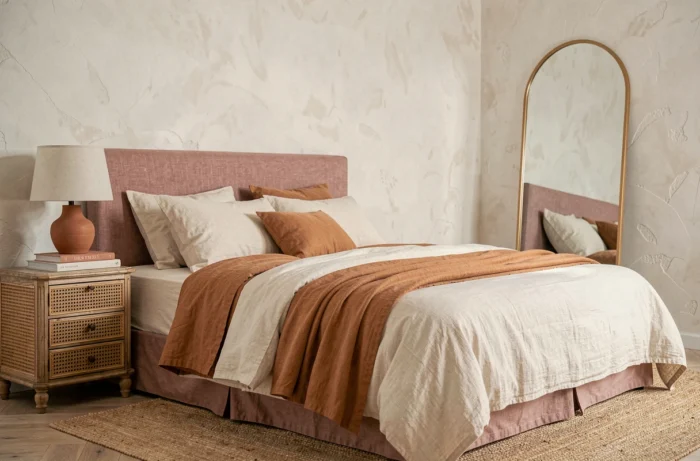
- A cotton gauze bed throw, casually draped, is enough to transform a simple bedroom into a cocoon.
We observe that the most successful interiors limit patterns to a single element per room, such as a kilim rug or a printed cushion, with the rest treated in solid textures. This discipline avoids the cluttered effect produced by the multiplication of prints.
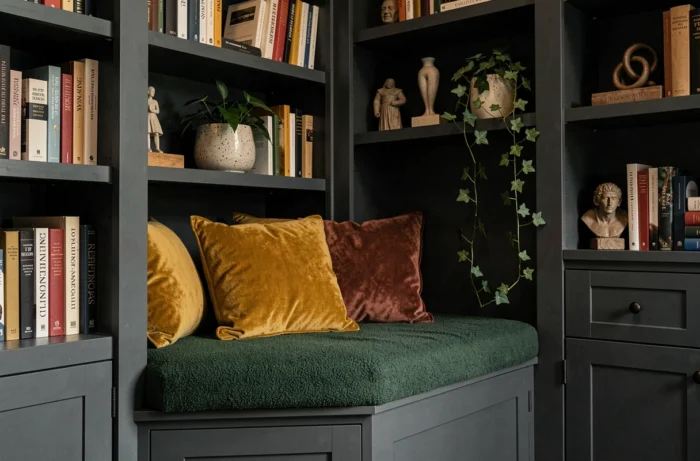
Interior decoration is moving towards spaces where each material justifies its presence through its quality and coherence with the overall project. Furniture, wall finishes, and textiles form a system, not a collection of isolated objects. A warm interior naturally results from this, without accumulation or artifice.