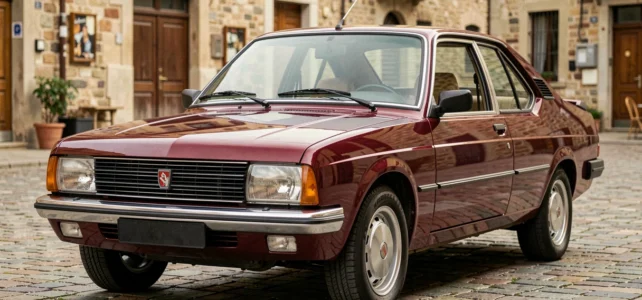
The Renault 30 is equipped with a PRV V6 (Peugeot-Renault-Volvo), stemming from an abandoned V8 project prior to production. What data separates the myth from the actual vehicle, and how does the technical sheet of this model compare to other French sedans of the same era?
The PRV Engine: From a V8 Project to a Production V6
The PRV engine was initially intended to be a V8 for high-end French sedans. The oil crisis of the early 1970s led the three partner manufacturers to reconfigure this block into a 90° V6 with reduced displacement. This architecture, unusual for a six-cylinder, directly derives from the original V8 design from which two cylinders were removed.
This industrial choice allowed for cost-sharing among Peugeot, Renault, and Volvo, but it also imposed compromises. The 90° angle between the cylinder banks, optimal for a V8, generates additional vibrations in a V6. Engineers had to compensate for this imbalance with a staggered crankshaft.
For enthusiasts looking to better understand the power of the Renault 30 V8, this distinction between the initial project and the engine actually produced is a technical starting point not to be overlooked.
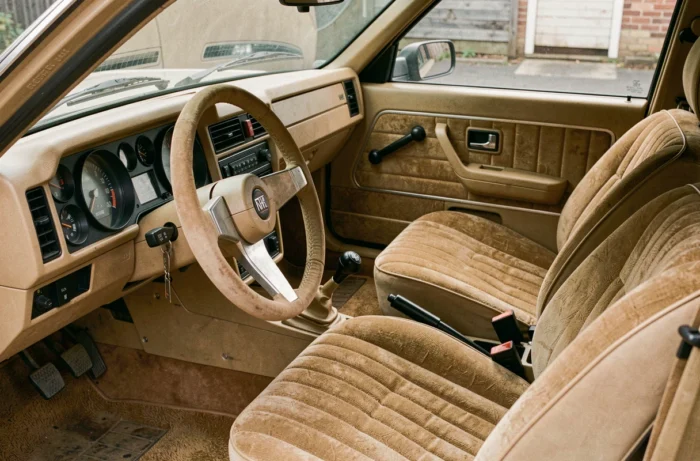
Renault 30 Technical Sheet: Key Data Against the Competition
The Renault 30 was produced from 1975 to 1983. To situate its characteristics, a comparison with other contemporary French sedans sheds light on Renault’s choices.
| Criterion | Renault 30 TS (1975) | Renault 30 TX (evolution) |
|---|---|---|
| Engine | V6 PRV 2,664 cm³ | V6 PRV 2,664 cm³ |
| Architecture | 90° V6 | 90° V6 |
| Fuel Supply | Carburetor | Injection |
| Class | Sedan (upper segment) | Sedan (upper segment) |
| Production Years | 1975 – 1983 | |
The transition from carburetor to injection in the TX version represented a notable gain in ease of use and operating consistency. Injection also improved cold behavior, a recurring weak point of the early TS models.
Renault 30 and Crit’Air Constraints: Driving in 2026
Owning a Renault 30 as a collector’s item does not pose the same questions as it did ten years ago. The gradual expansion of low-emission zones (LEZ) in France is significantly changing the daily usage conditions of this vehicle.
A model produced between 1975 and 1983 can only claim a Crit’Air 5 sticker or end up unclassified. In large urban areas like Lyon, checks are already affecting Crit’Air 3 vehicles. Restrictions on Crit’Air 4 and 5 will tighten in 2026 in several metropolitan areas.
The practical consequences for a Renault 30 owner are as follows:
- Access to city centers in major French metropolitan areas becomes prohibited during regulated hours, except for specific exemptions for collector vehicles registered with a collector’s registration certificate
- Daily trips in dense urban areas are no longer feasible without the risk of fines, confining the car to leisure or gathering use
- Resale on the French market is becoming more complicated, while Eastern European collector markets are showing rising prices for well-maintained examples, particularly in Poland
Collector Registration: A Lever to Know
Registration as a collector vehicle offers an exemption in certain LEZ, but it imposes constraints: the vehicle must be over thirty years old and can no longer serve as a primary means of transport. For a Renault 30, this threshold is far exceeded. This option remains the main legal means to continue driving occasionally in urban areas.
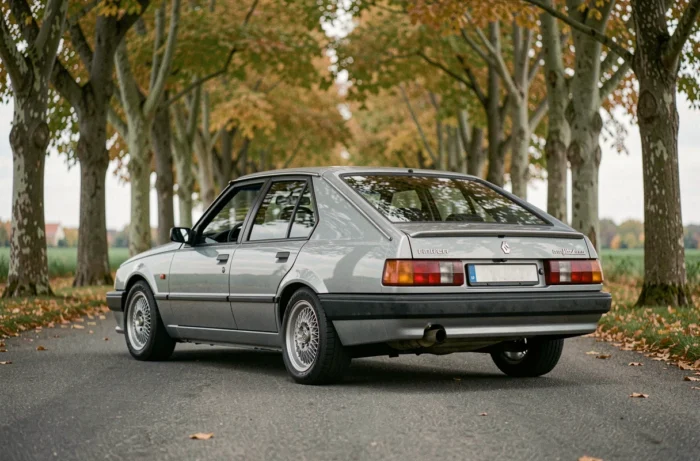
Value and Market of the Renault 30: A Reevaluation in Progress
Specialized listings from 2025-2026 show well-maintained Renault 30 TX models offered at price levels significantly higher than those observed a decade ago. Several factors explain this trend.
The scarcity of examples in usable condition plays a direct role. The PRV V6 is common to several iconic GTs (Volvo 264, Peugeot 604, Alpine A310 V6), which maintains a shared parts ecosystem but also cross-recognition among collectors.
The renewed interest in large French sedans from the 1970s-1980s is another driver of this revaluation. Models that have long been undervalued, such as the Peugeot 604 or Citroën CX, are experiencing a similar dynamic. The Renault 30 benefits from this movement, with an advantage: its eight-year production makes it less common than some competitors.
The Douvrin factory, where the PRV engine was manufactured, has been the subject of recent articles related to its conversion. The end of production at this site in 2026 fuels the heritage dimension of the PRV block and, by extension, the vehicles that housed it.
The Renault 30 holds a unique place in the French automotive landscape: a PRV V6 shared among three manufacturers, an architecture inherited from a V8 project, and traffic restrictions that now direct its use towards pure collection.