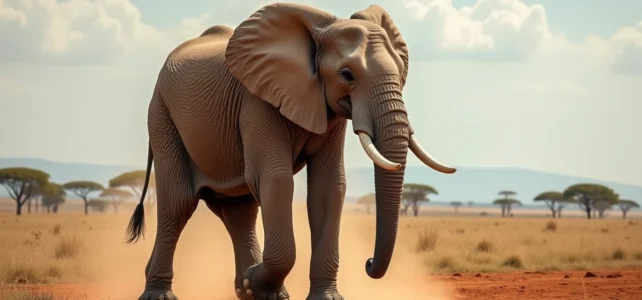
Most articles on safaris recycle the same descriptive sheet of the Big Five. Here, we offer a field-oriented overview based on the behavioral dynamics and ecological niches that experienced guides exploit to optimize each outing in the savannah.
Predator-prey dynamics and observation slots on safari
The temporal distribution of predators shapes the structure of a game drive day. Lions primarily hunt at the end of the night and at dawn when the low temperature favors prolonged effort. In mid-morning, prides gather in the shade, which paradoxically makes them easier to locate from a vehicle.
The leopard, strictly crepuscular and nocturnal, imposes a completely different rhythm. Lodges that schedule outings in the late afternoon in tree-lined river areas significantly increase the chances of spotting them. We observe that the leopard often perches in the forks of large trees along watercourses, where impalas come to drink.
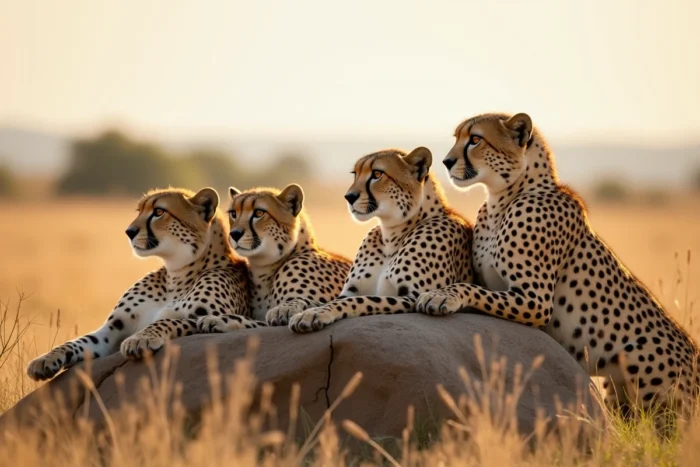
The cheetah, on the other hand, hunts during the day on open plains. Its activity window covers the morning, making it the most reliable predator to observe during a classic game drive in the Masai Mara or Serengeti. This complementarity between predators explains why a well-planned three-day safari covers more diversity than a week without a timing strategy.
Among the animals of the African savannah, these three felines illustrate a fundamental principle: each species occupies a distinct temporal and spatial niche, and it is this partition that structures the safari experience.
Small Five, Ugly Five, Shy Five: thematic safaris beyond the large mammals
The most striking trend in recent years in the safari industry is the rise of thematic safaris centered around lesser-known groups of animals. Three categories structure this offering.
- The Small Five include species whose names echo those of the Big Five: the rhinoceros beetle, the elephant shrew, the tortoise leopard, the weaver buffalo, and the antlion. Their observation requires a walking guide, attentive to the microfauna of the ground and low canopy.
- The Ugly Five gather the warthog, the marabou, the vulture, the spotted hyena, and the wildebeest. These species, often overlooked by amateur photographers, play a leading ecological role in recycling carcasses and regulating health in the savannah.
- The Shy Five (aardvark, zorilla, bat-eared fox, aardwolf, porcupine) can only be observed on night safaris. Lodges equipped with infrared spotlights or red lamps offer dedicated outings after dinner.
This diversification of safari formats caters to an increasingly specialized clientele. It also helps to distribute tourist pressure over a broader spectrum of species, benefiting local conservation programs.
Aquatic wildlife and mokoro safari in the Okavango Delta
The Okavango Delta radically transforms the approach to safari. Here, the 4×4 gives way to the mokoro, a traditional wooden canoe that allows navigation between channels lined with papyrus. The angle of observation changes: you find yourself at water level, just a few meters from hippos and Nile crocodiles.
The birdlife of the delta is exceptional. Goliath herons, jacanas, and fishing eagles share the channels with sitatungas, semi-aquatic antelopes rarely seen in dry savannah reserves. Botswana has developed a tourism positioning around this aquatic wildlife, distinct from the Kenyan or Tanzanian offerings focused on the plains.
During the flood season, elephants swim across the channels. This spectacle, often absent from classic brochures, constitutes one of the most striking moments of a safari in the region. Observation from a mokoro requires silence, which reduces the stress of the animals and improves the quality of encounters.
Desert-adapted species: Namibia and exceptional wildlife
Namibia is home to animal populations adapted to extreme conditions that other safari destinations do not offer. Desert elephants, smaller and with longer legs than their savannah cousins, roam the dry riverbeds of Damaraland in search of underground water tables.
Desert lions, another distinct population, primarily hunt oryx and springboks over vast territories. Their density is very low, making each observation rare and valuable. Namibian guides use GPS collar tracking to locate the prides, a method that differs from the visual tracking practiced in the Masai Mara or Serengeti.
The oryx, perfectly adapted to dehydration, can survive without drinking for long periods thanks to a cerebral blood cooling system. This species is the faunal symbol of Namibia and one of the most sought-after photographic subjects in desert safaris.
Gorillas and chimpanzees: foot tracking safari in Uganda and Rwanda
Tracking mountain gorillas in Uganda and Rwanda constitutes a radically different form of safari from the game drive in a vehicle. Tracking is done on foot, in dense forest, for several hours, guided by trackers who spot the previous day’s nests and fresh tracks.
Visitor groups are limited in size and duration of contact with the gorillas. This strict regulation protects the primates from stress and health risks associated with human proximity. The experience remains among the most intense that the continent offers, precisely because it imposes a physical effort and patience that motorized safari does not require.
Chimpanzees, observable in Kibale Forest in Uganda, add a fascinating behavioral dimension: complex vocal communication, tool use, visible social hierarchies within minutes of observation.
The choice of a safari in Africa relies less on the destination than on the type of interaction sought. Open plains of Kenya, channels of Botswana, Namibian deserts, or Ugandan high-altitude forests, each ecosystem imposes its rhythm, its species, and its method of observation. African wildlife richness is measured as much in the diversity of environments as in that of species.